
Are Your Marketing Channels
Working Together?
A structured audit for companies investing in marketing but lacking a reliable view of what drives growth, where performance is being lost and which priorities should come next.
Marketing can look active while
the system remains difficult to steer.
Campaigns are running, content is being published and agencies are delivering reports. Yet leadership still lacks a reliable answer to three basic questions.
In most cases the missing piece is one commercial view across strategy, channels, data, teams and the customer journey.
The audit is designed for companies
where marketing is already in motion.
What the audit examines
Strategy and economics
Business objectives, positioning, growth assumptions, commercial priorities and relevant unit economics.
Customer journey
How awareness, consideration, demand, conversion and retention connect across channels.
Channel roles
The intended and actual function of content, SEO, social, paid media, email, CRM and ecommerce.
Data and measurement
Tracking, reporting, attribution, KPI definitions and the gaps between platform reports and business performance.
Organisation and execution
Responsibilities, agency coordination, decision rights, workflows, handovers and operational dependencies.
Growth constraints
The bottlenecks, compensating channels and structural risks most likely to limit performance.
What you receive
Implementation is scoped separately once the findings are agreed.

Why I look at the whole system
I have spent more than ten years working across strategy, paid acquisition, content, analytics, conversion and marketing operations. That experience has taught me that isolated channel decisions rarely remain isolated. Every meaningful change affects the wider commercial system.
My role is to make those relationships visible, challenge assumptions and help teams make decisions based on the full picture.
How the audit works
Clarify the business question, available systems, stakeholders and data sources.
Review strategy, channels, customer journeys, reporting, responsibilities and commercial performance.
Identify where one channel is compensating for another, where handovers break and which metrics create a misleading picture.
Translate the diagnosis into decisions, owners and a focused 90-day roadmap.
Present the findings, discuss trade-offs and agree the next commercial priorities.
A defined engagement
with a concrete outcome.
The final scope depends on company size, number of markets, active channels, data availability and required stakeholder interviews.
The audit creates a decision basis,
not a dependency.
The audit is a complete standalone engagement. Your team receives a prioritised roadmap that can be implemented internally or with existing partners.
Where ongoing strategic leadership or implementation oversight is needed, support can continue through a defined advisory project or Fractional CMO engagement. This is discussed only after the audit has established the actual need and scope.
An anonymised example
of what the audit surfaces.
A shift from business-led short-form content to creator-led content optimisation improved visible reach while owned traffic, brand attribution and the wider commercial pathway weakened. The case study shows how the pattern was identified.
Read the case study →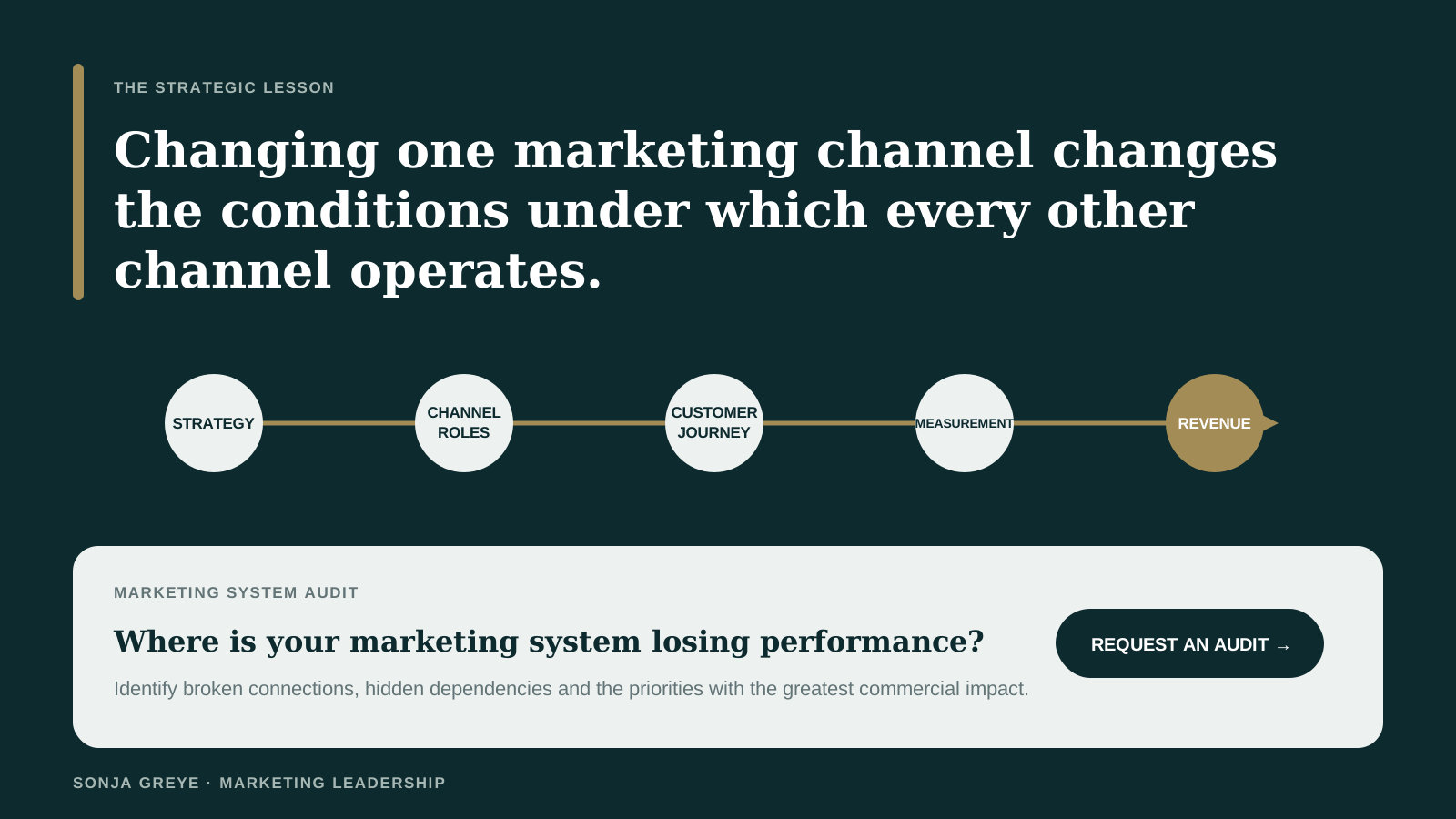
Find out where your marketing system is losing performance.
Start with a short conversation to clarify the business question, your current marketing setup and whether the Marketing System Audit is the right format.