
When Social Reach Stopped
Translating Into Revenue
A working marketing system was growing. One component of it, social media execution, moved from a business-led framework to creator-led content optimisation. Visibility rose, and when performance was assessed across social, owned content, search, paid media and ecommerce, a different picture emerged.

Four observations from the analysis.
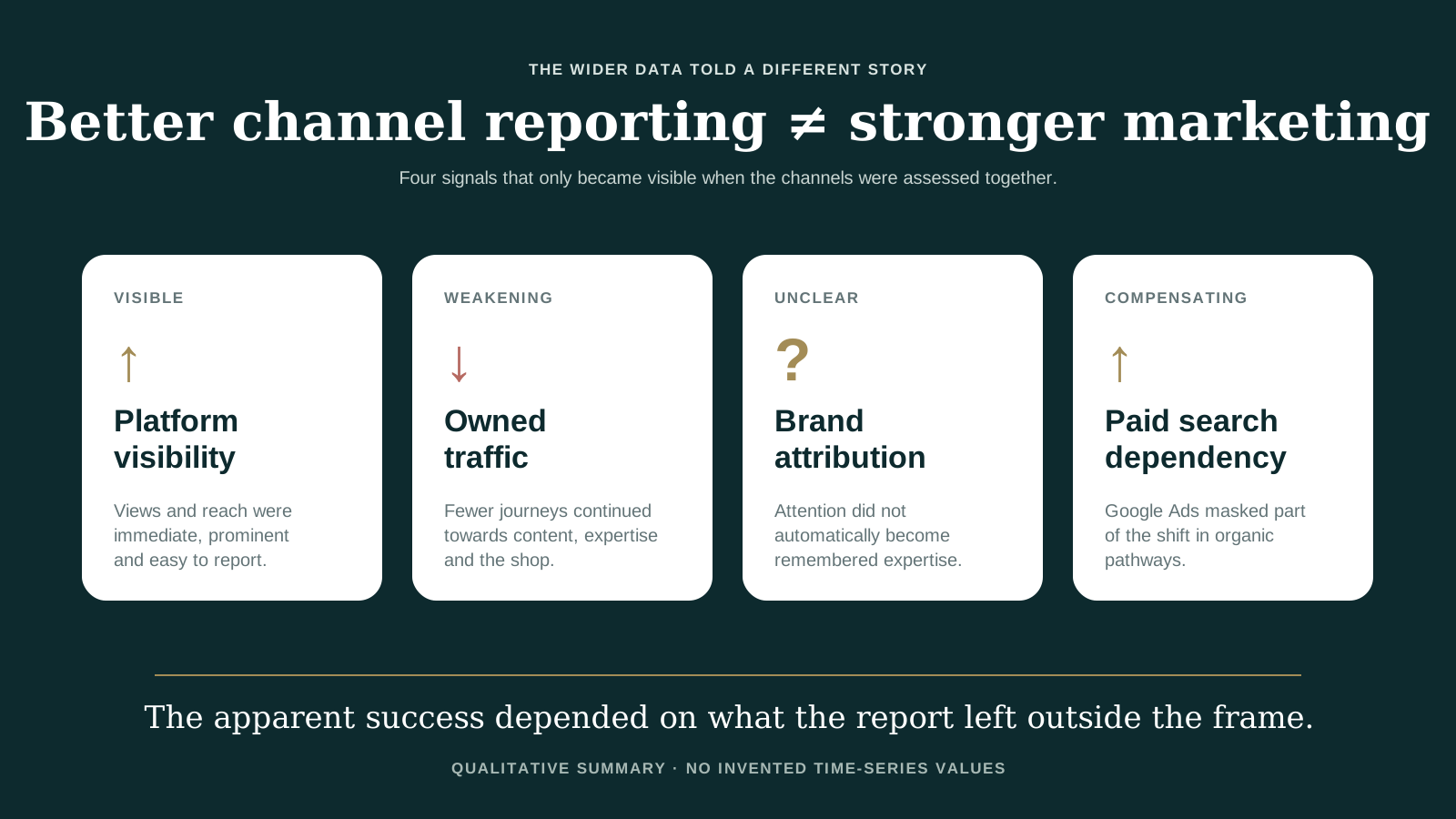
Visible signal
Creator-led reels generated immediate visibility. Reach rose while engagement stayed comparatively low, and channel reporting still read as progress.
Structural change
The connection between social content, owned expertise, relevant product pages and the next commercial step weakened.
Masking effect
Google Ads compensated for part of the decline, allowing overall performance to appear more stable than the underlying system.
Commercial implication
Scenario analysis indicated several thousand euros of additional potential over the analysed two-month period. This was an estimate rather than proof of directly lost revenue, and it became visible early enough to act on.
Social media was part of a
connected commercial system.
The company had built a marketing system that was working and growing. Social content created awareness, educational content developed trust, search captured existing demand and the ecommerce platform converted that demand into revenue. Each part had a defined role, and the parts reinforced each other.
Social media acted as an entry point into an owned content ecosystem, connecting customer problems with the company's expertise, relevant guidance and suitable products.
This meant the commercial value of social media could not be assessed solely through views, reach or engagement. Its role depended on what happened after the initial interaction, and on how well it fed the components that followed.
The channel strategy changed
despite a clear system-level recommendation.
Short-form video was already part of the recommended strategy. The requirement was clear: reels needed to make the company recognisable, connect the topic to its expertise or products, and give interested users a logical next step within the wider customer journey.
The later social media execution moved away from that framework despite my recommendation to keep the content clearly connected to the brand, expertise and wider customer journey. A creator was engaged and largely produced content in the logic typical of creator work, optimised for platform visibility.
The issue was not using a creator, and not the reel as a format. The issue was the assumption that visually strong, reach-capable content would automatically produce a business contribution. Creator content can succeed by building attention around the person creating it. Company content carries an additional commercial task: viewers need to recognise the brand, understand its relevance and be able to continue towards expertise, products or another meaningful next step. A creator can generate attention without that attention transferring to the company.
The alternative approach went ahead despite that recommendation. Reels became increasingly optimised for visible platform performance, while some of the connections to brand, owned content and the wider commercial journey weakened. The new approach quickly produced metrics that were prominent, immediate and easy to interpret as success.

Visibility was interpreted
as effectiveness.
Views and reach rose quickly while engagement remained comparatively low. The visibility figures created the impression that social performance had strengthened. Platform reporting left the commercially relevant questions unanswered.
In part the company reference became weak enough that observers could read the reels as ordinary content from the creator rather than from the business. If viewers recognise the creator and not the company, reach alone says very little about commercial impact.
The social channel looked more successful when viewed on its own. The wider data showed that the role it played within the marketing system had changed.
A change in one component
affected the performance of several others.
The analysis compared performance before and after the strategy change across social distribution, owned content, organic search, Google Ads and ecommerce revenue.
The deliberate reduction in paid-social activity and the corresponding shift towards Google Ads were treated separately. This distinction was necessary to avoid attributing an intentional budget decision to the organic social strategy.
Traffic reaching the ecommerce environment through the company's own content pathways had previously demonstrated meaningful commercial value. Social media was never an isolated channel here. It was one component of a system that was already working, and the changed execution partly decoupled it from the rest. As those pathways weakened, Google Ads helped maintain demand capture and partly concealed the break.
Stable topline performance did not mean
the strategy change was neutral.
To understand the possible commercial effect, two scenarios were compared with the reported path for the analysed two-month period: a conservative scenario maintaining the preceding month's performance level, and a scenario incorporating the previous year's seasonal development.
With the reported path for the analysed two-month period indexed at 100, the conservative scenario reached approximately 140 and the seasonality scenario approximately 182. This suggests an opportunity range around 40 to 82 percent above the reported scenario level for that period.
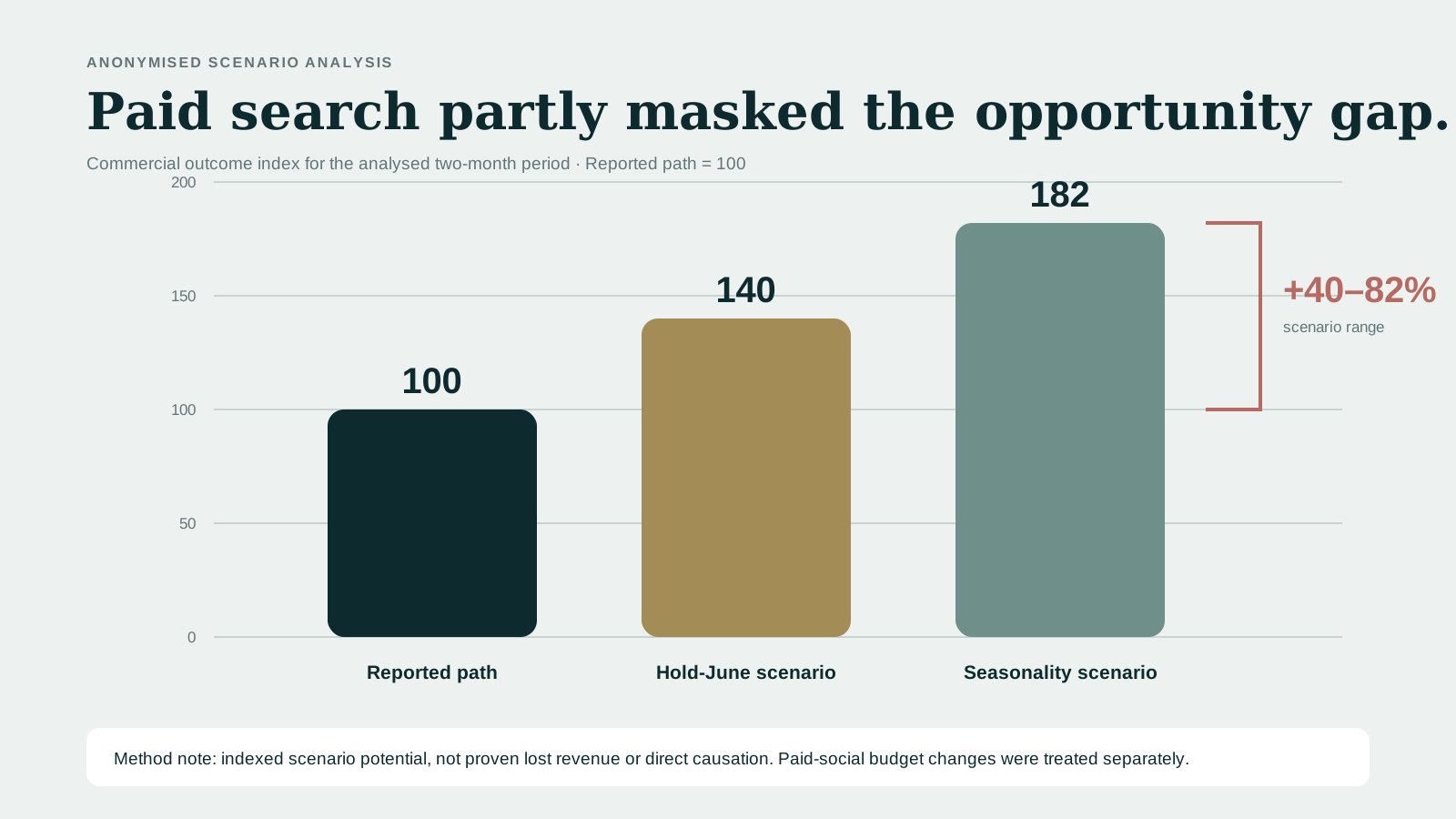
Scenario analysis illustrates potential outcomes under alternative assumptions. It does not establish direct causation or proven lost revenue. Paid-social budget changes were considered separately.
The analysis confirmed the role short-form video
had been intended to play from the beginning.
The recommendation was never to abandon reels. Short-form video was intended to operate as one part of the wider marketing system, with each piece of social content connected through four commercial stages.
Start with a relevant problem, question or situation.
Make the company and its expertise clearly recognisable.
Connect the topic naturally to relevant products, services or guidance.
Give interested users somewhere meaningful to continue.
The later analysis did not create this framework. It showed what happened when these connections were weakened. The resulting recommendation was therefore to restore the original system logic.
The pattern was identified while it was still correctable. Because social, owned content, organic search, paid media and ecommerce were examined together rather than channel by channel, the effect on the wider system became visible early. The strategy could then be adjusted on the basis of figures and documented pathways, instead of compensating for a structural change by moving more budget into paid advertising.
A channel can improve its own metrics
while weakening the system around it.
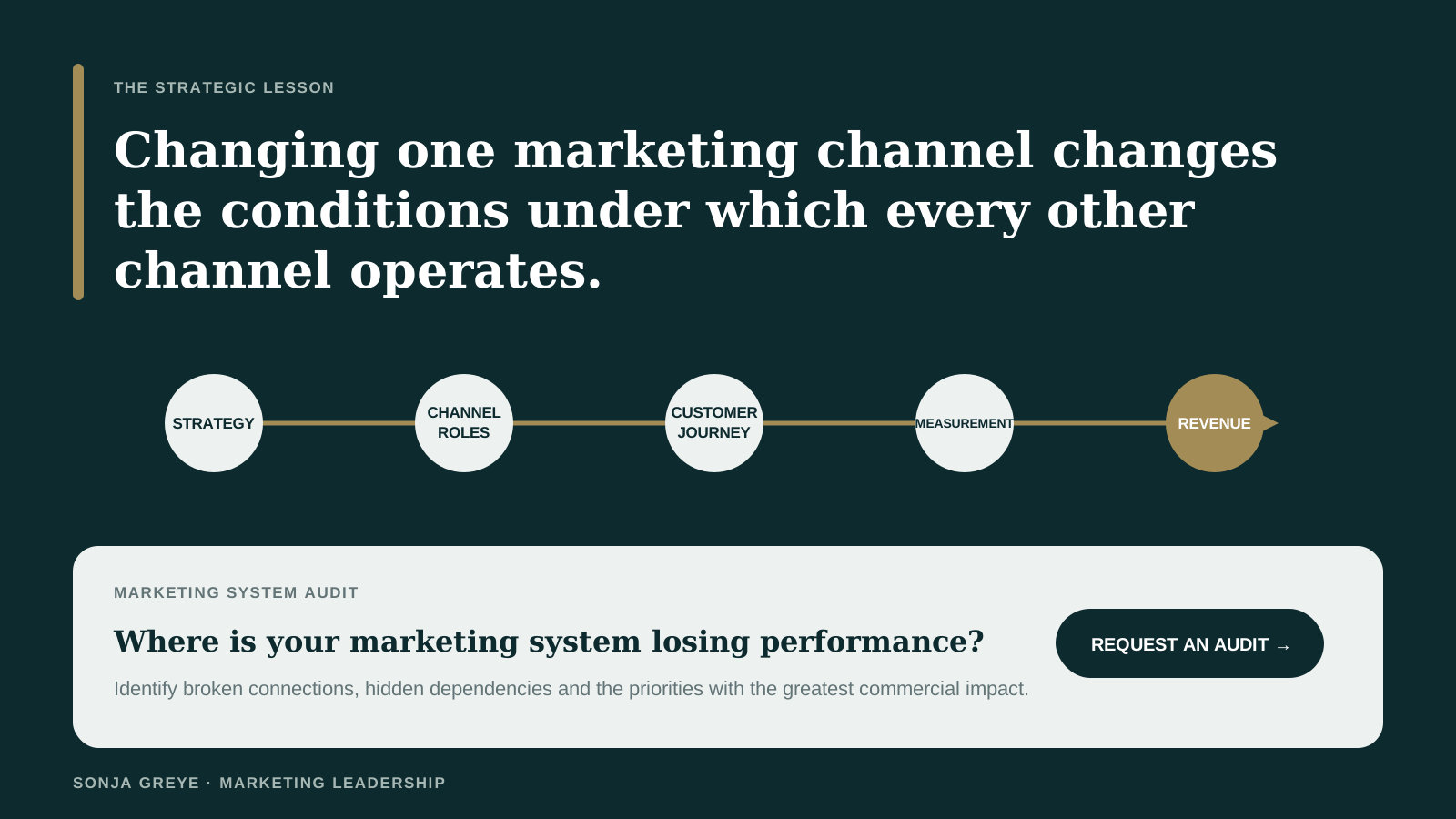
Marketing disciplines are interdependent. Social media shapes attention and demand. Content develops relevance and trust. Search captures intent. Paid media compensates for gaps. The ecommerce platform converts demand into revenue, while CRM and retention determine how much long-term value the system creates.
Changing one element changes the conditions under which all the others operate. This is why channel decisions need to be assessed against one shared commercial strategy.
Reach, engagement, traffic and revenue are different stages of the same system. Optimising one stage without understanding its role can produce better-looking reports and weaker business results.
Where is your marketing system losing performance?
The Marketing System Audit examines every channel together rather than one report at a time. It identifies broken connections, hidden dependencies and the priorities likely to have the greatest commercial impact, early enough to change course on the basis of figures rather than by adding budget.